Menu
Pouring Concrete vs. Precast in Bellevue, WA
Pouring Concrete Bellevue
Choosing between pouring concrete and precast methods shapes the outcome of your project. Each approach offers distinct advantages depending on the application, timeline, and site conditions. Bellevue’s wet climate and varied terrain add another layer to this decision. Understanding the differences helps you select the right method for your needs. This guide compares both options across the factors that matter most.
How Pouring Concrete Works
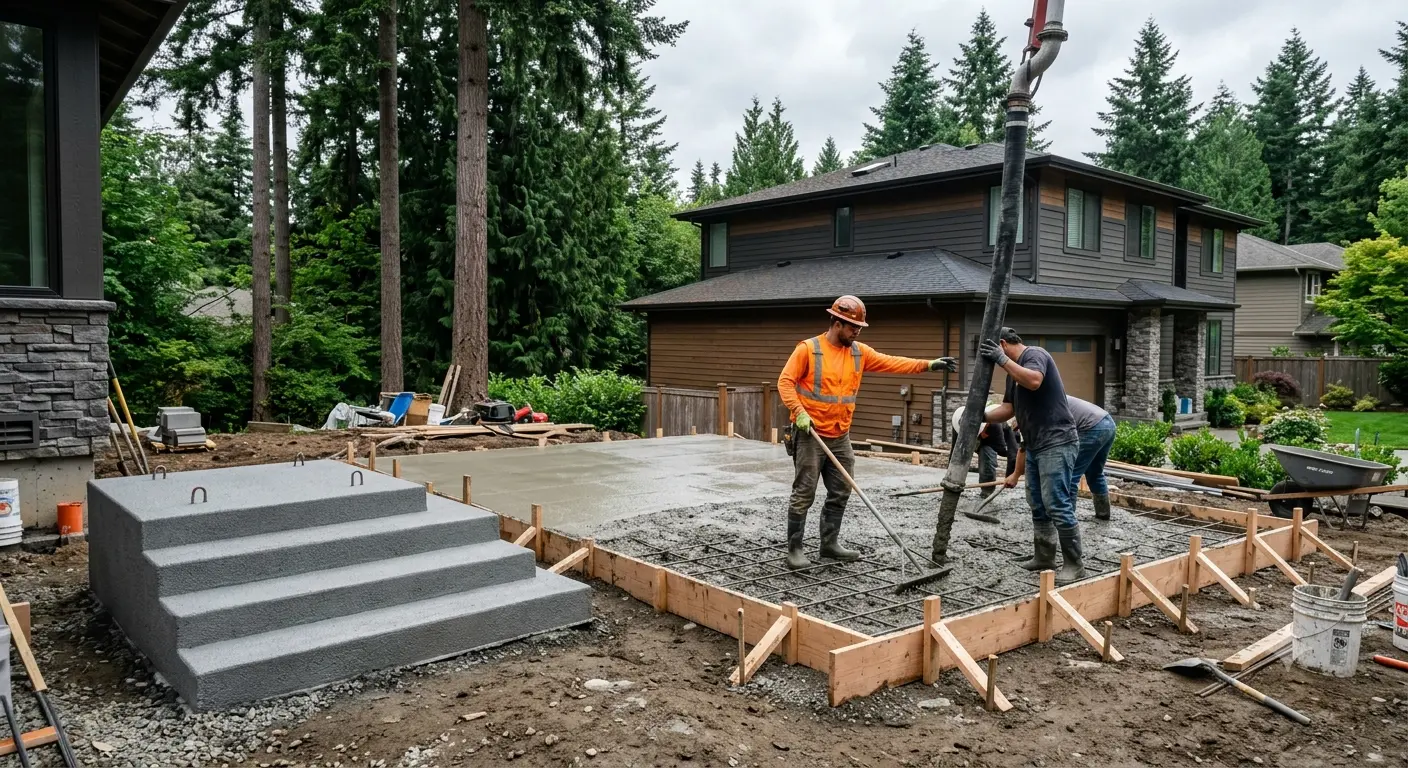
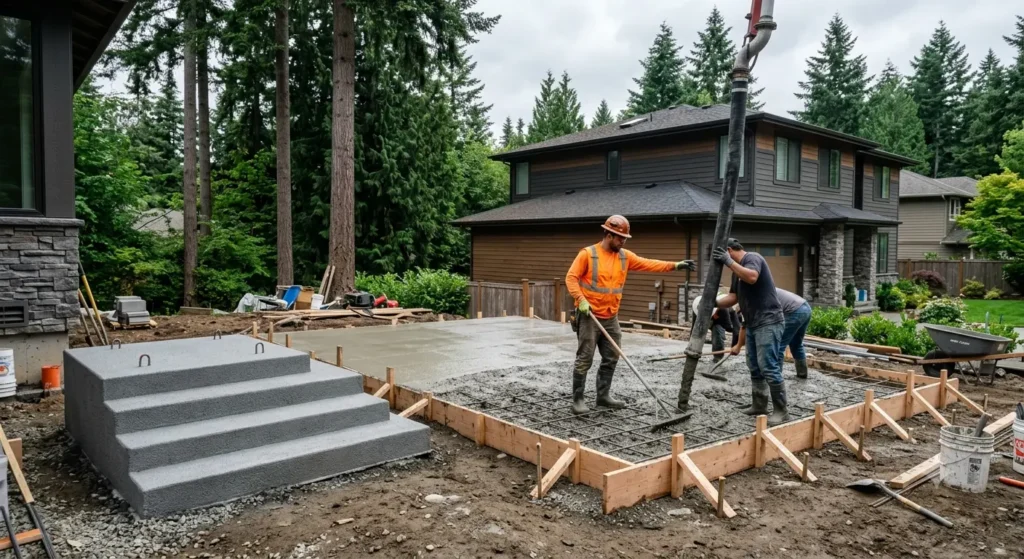
Cast-in-place concrete is mixed and poured directly into forms at your project site. The material cures in position, creating a seamless structure with no joints between sections. This method allows complete customization of shape, size, and finish. Contractors can adjust the mix design to suit specific strength and weather requirements.
Bellevue’s climate requires careful scheduling for poured concrete. Rain and cool temperatures affect curing, so contractors monitor forecasts closely. Proper curing compounds and protective coverings help achieve target strength. When done correctly, cast-in-place concrete delivers exceptional durability and a uniform appearance.
How Precast Concrete Works
Precast concrete is manufactured in a controlled factory environment, then transported to the site for installation. This approach allows precise quality control over mixing, curing, and finishing. Precast panels, steps, and retaining wall blocks arrive ready to be set in place. Installation typically moves faster because curing already happened off-site.
Factory conditions eliminate weather delays that affect poured concrete. Precast products also offer consistent strength and appearance because every piece follows the same process. However, transportation limits the size and shape of precast elements. Custom designs may require multiple pieces joined together on site.
Cost Comparison for Bellevue Projects
Poured concrete usually costs less per square foot for large, simple projects. Labor, materials, and formwork make up the bulk of the expense, and economies of scale favor bigger pours. For driveways, patios, and foundations, cast-in-place often provides the best value.
Precast concrete carries higher material costs due to manufacturing and transportation. However, faster installation can offset some of that premium, especially on small or complex jobs. Projects with limited site access may benefit from precast because it reduces on-site labor time. Comparing total project costs rather than unit prices gives the clearest picture.
Timeline and Scheduling Differences
Poured concrete requires curing time before the surface can bear weight. Standard curing takes about seven days for initial strength, though full strength develops over weeks. Rainy weather in Bellevue can extend this timeline and complicate scheduling. Contractors often build flexibility into their plans to accommodate local conditions.
Precast concrete arrives ready for immediate installation, which shortens the overall project timeline. Site preparation still takes time, but the curing phase disappears entirely. For projects with tight deadlines or weather concerns, precast offers a clear scheduling advantage.
Durability and Long-Term Performance
Both methods produce durable results when installed correctly. Cast-in-place concrete forms a monolithic structure with no seams, which reduces weak points. This continuity makes it ideal for foundations, driveways, and structural elements. Proper reinforcement and base preparation further extend its lifespan.
Precast concrete benefits from controlled curing, which often yields consistent strength throughout each piece. Joints between precast sections can become entry points for water, especially in Bellevue’s rainy climate. Proper sealing and drainage management protect these joints and preserve performance over time.
Design Flexibility and Appearance
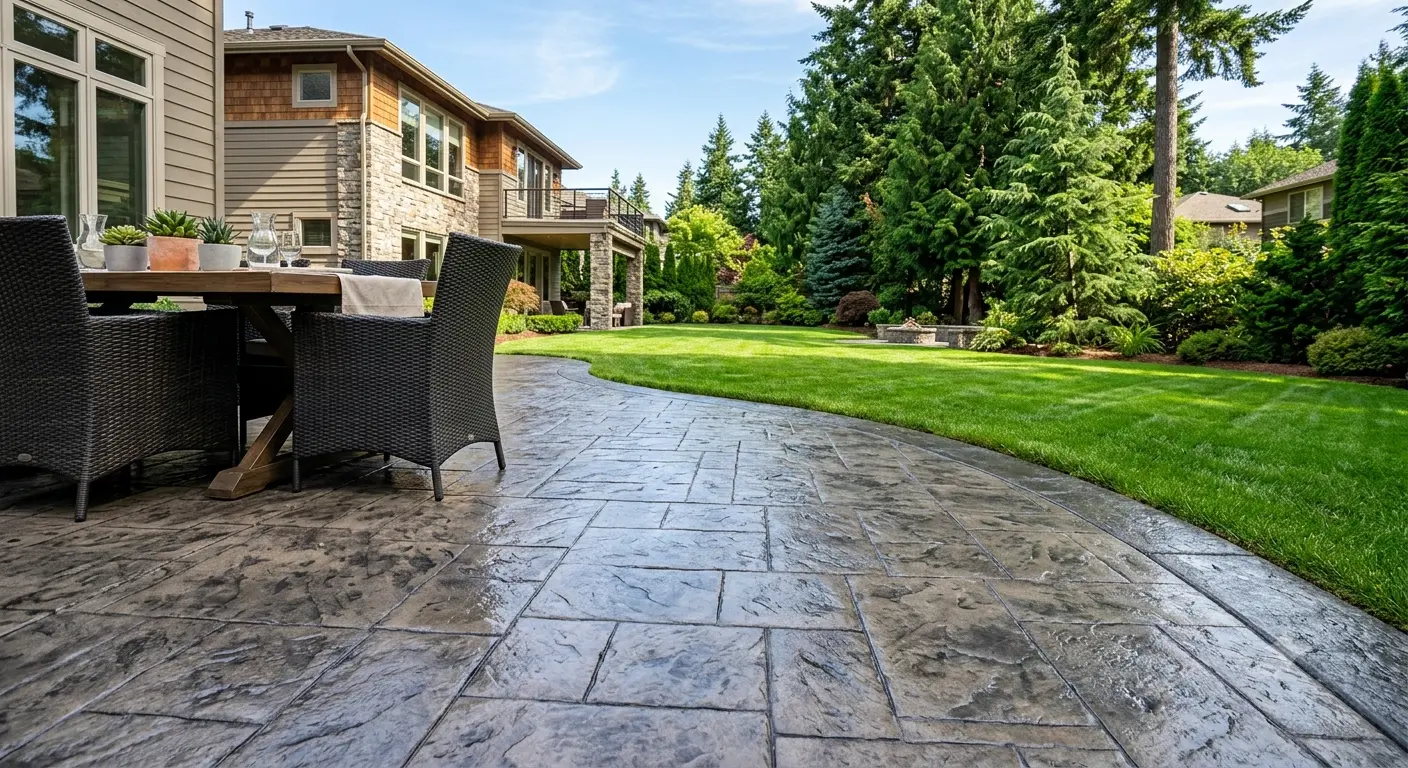
Pouring concrete offers nearly unlimited design freedom. Curved edges, custom textures, stamped patterns, and integrated colors are all possible with cast-in-place methods. Homeowners seeking a unique patio or decorative driveway often prefer this approach. Adjustments can be made on site as the work progresses.
Precast concrete comes in a fixed range of shapes, sizes, and finishes. Manufacturers offer various colors and textures, but true customization remains limited. For projects requiring uniform, repetitive elements like retaining wall blocks or steps, precast delivers consistent results efficiently.
Best Applications for Each Method
Cast-in-place concrete excels in driveways, patios, foundations, and walkways where customization and seamless strength matter. Large pours benefit from the lower unit cost and design freedom. Structural applications almost always favor poured concrete because of its continuous load-bearing capacity.
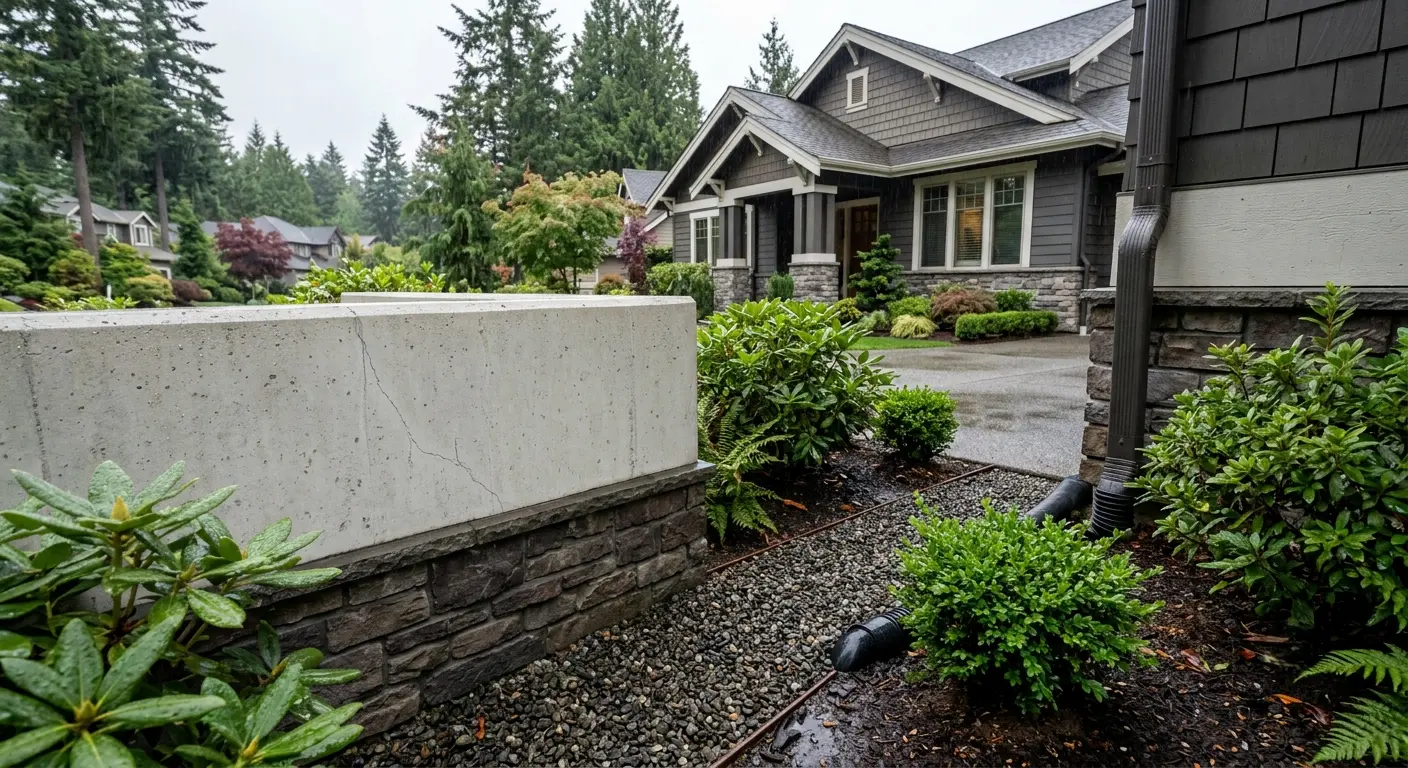
Precast concrete suits retaining walls, steps, utility vaults, and smaller decorative elements. Projects with limited access or tight schedules gain the most from factory-made components. Storm drainage structures and sound walls commonly use precast for these reasons.
Which Method Suits Bellevue Homes
Bellevue’s climate and terrain influence the choice between these methods. Frequent rain makes curing management critical for poured concrete, though experienced contractors handle this routinely. Sloped properties and tight lots sometimes favor precast because installation requires less heavy equipment and site disruption.
Local building codes apply to both methods, and permits may be required depending on the project. Working with a contractor familiar with Bellevue regulations ensures compliance and avoids delays. The right choice ultimately depends on your specific goals, budget, and site conditions.
At Bellevue Concrete Masters, we guide homeowners through every option to find the best solution for their property. Our team handles poured concrete projects with precision suited to the Pacific Northwest climate. Contact Bellevue Concrete Masters for a free estimate and expert advice on your next project.
LATEST POSTS